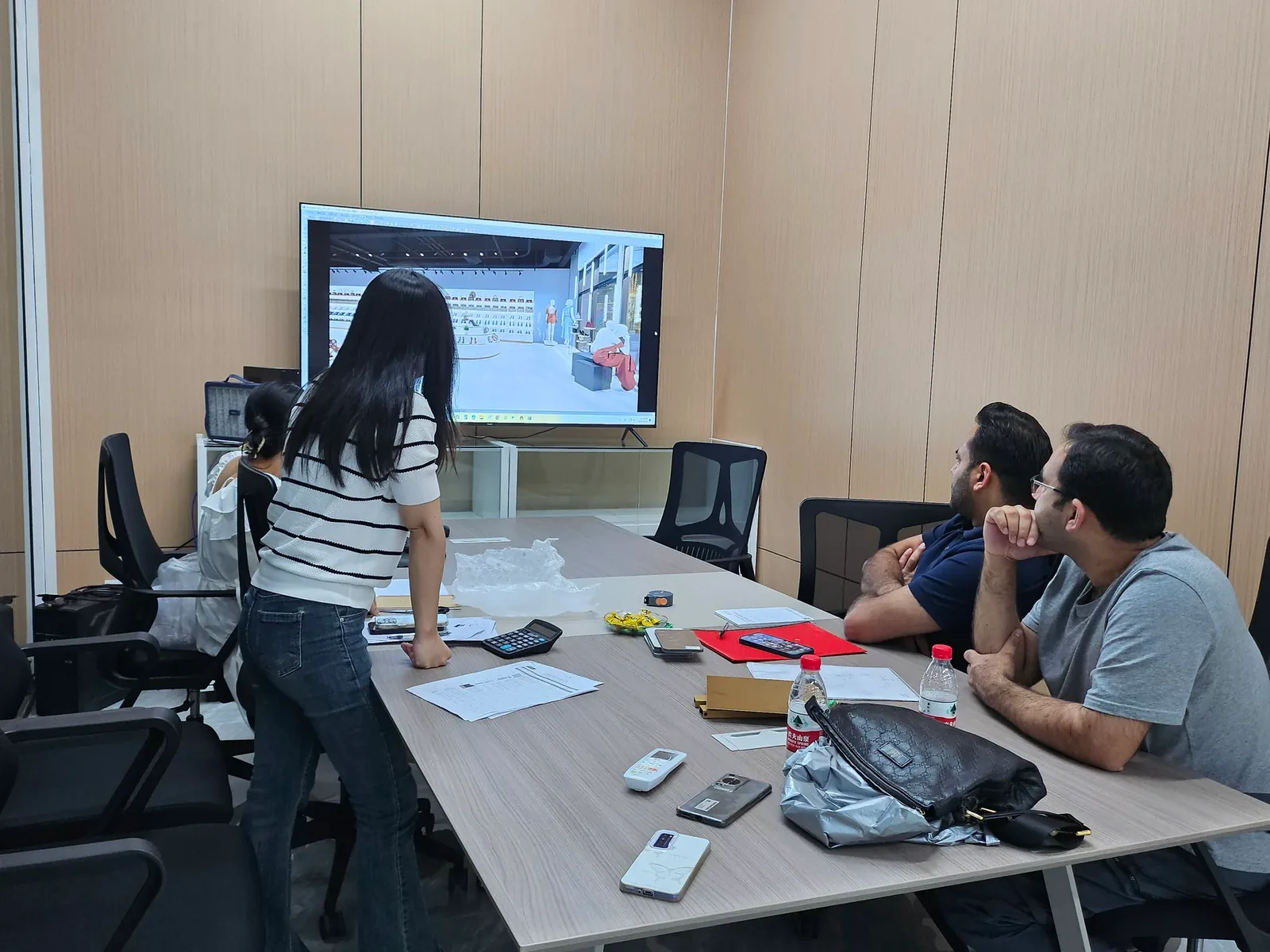
Reviewing a Store Layout with Accessible Shopping Needs in Mind
An accessible-shopping review should consider the complete journey through the store: entering, finding merchandise, obtaining information, making a selection, receiving service and leaving.
- Published
- 2026-09-08
- Updated
- 2026-09-08
- Reading time
- 8 minutes

An accessible-shopping review should consider the complete journey through the store: entering, finding merchandise, obtaining information, making a selection, receiving service and leaving. Looking only at the empty spaces between cabinets misses important interactions with products, equipment and staff.
Three decisions to carry into your project.
- 01
Establish the applicable review responsibility
- 02
Include a range of shopping tasks
- 03
Review the stocked arrangement
Start with the decision
An accessible-shopping review should consider the complete journey through the store: entering, finding merchandise, obtaining information, making a selection, receiving service and leaving. Looking only at the empty spaces between cabinets misses important interactions with products, equipment and staff. The buyer needs both a project-specific compliance review and a practical understanding of how people use the proposed store.
Use a journey review to organise observations and questions, while assigning technical and legal interpretation to the appropriate local professionals. Requirements vary with jurisdiction and project conditions. This article does not certify a layout or prescribe universal dimensions; it explains how to prepare a more useful brief and avoid losing accessibility needs during fixture and merchandising decisions.
Establish the applicable review responsibility
Identify who will determine the requirements for the actual location and scope of work. A supplier producing fixtures may not be responsible for the whole building layout, and a landlord's design acceptance may address a different scope from the required accessibility assessment. The project should make those boundaries explicit.
For a US project, the US Access Board's ADA resources provide official standards and guidance covering subjects such as accessible routes and sales or service counters. The US Department of Justice small-business primer provides further business-oriented guidance. These are US references, not a substitute for determining the requirements in another country or for the particular project.
Record the reviewer's inputs and the drawing revision being assessed. If the fixtures, counter equipment or routes change later, identify the affected requirements for renewed review. A confirmation tied to an earlier arrangement should not be treated as permanent approval of every future merchandising change.

Include a range of shopping tasks
Start with what visitors need to do, rather than assuming one user profile describes all accessibility needs. People may use mobility devices, have different reach or vision needs, require clearer information or prefer a different form of assistance. The review should consider the users and tasks relevant to the store without reducing disability to one physical dimension.
Identify the principal product-selection methods. Directly selected boxes, display-only figures and staff-retrieved sale units create different journeys. A visitor should be able to understand how the purchase works and how to obtain assistance through the store's actual service arrangement.
Where user participation is practical, invite relevant people to review the proposed tasks and listen to their observations. Do not treat one participant as representative of everyone. Their experience can reveal specific problems and questions that complement the professional review rather than replace it.
Review the stocked arrangement
Include the intended products, signs, equipment and temporary materials in the layout assessment. A clear route on an empty plan can change when merchandise projects beyond a fixture or a promotional stand is added. The review should describe the store as it is expected to operate.
Show relevant moving parts, such as cabinet doors or drawers used during service. The supplier should provide the actual fixture information needed for the review. Do not assume that a closed cabinet outline captures every condition customers and staff will encounter.
Record areas where people stop, wait or receive assistance. These activities may interact with movement through the store. The responsible professional must determine the applicable requirements, while the operating review helps explain how the proposed arrangement will actually be used.
Connect merchandise access with staff service
Some products may require assistance because of their display method or location. Define how a customer requests that assistance and where the interaction occurs. A general promise that staff will help is less useful than a service arrangement that the layout and operating plan support.
Ask whether the customer can identify the relevant service point and communicate the product they want. Product codes, clear labels or another suitable identification method can support the task. The store should decide how information is made understandable in the context of the actual merchandise.
Do not assume staff assistance eliminates the need for accessible routes, suitable counters or other applicable requirements. The service process and physical design should be coordinated through the appropriate review. The article's journey method helps identify the relationship but does not decide legal compliance.
Examine information and wayfinding
Review how visitors recognise categories, prices where displayed, purchase instructions and service destinations. Consider the actual viewing positions and the visual environment around the information. A sign that looks clear in a close-up graphic file may be harder to use in the stocked store.
Keep instructions concise and connected to the task. If a figure is a display sample, the visitor should understand how to obtain the sale unit. If assistance is available elsewhere, the route to that service should not depend on an unexplained staff-only convention.
Ask the relevant reviewers about communication needs and suitable ways to provide information. Avoid assuming that one visual sign or one digital method serves every visitor. The operating plan should explain the options the store will actually provide and who maintains them.
Review the checkout as a service sequence
Include the actual equipment and merchandise handover at the counter. A drawing of an empty surface does not show where payment equipment, packaging or other items will be placed. The relevant accessible service arrangement must remain usable in the operating state, not only during design presentation.
Trace the journey from the main selection zones to the checkout or assistance point. Include any distinct collection or return service that the business provides. The professional review needs the actual service types and locations rather than a generic label covering several different interactions.
Ask staff to demonstrate a representative purchase with the proposed counter arrangement. Record practical observations and refer technical questions to the responsible reviewer. A successful demonstration can be useful evidence about a task, but it should not be described as certification of the complete store.
Use a journey-and-responsibility register
The following table provides a structure for coordination. It contains review questions rather than numerical design requirements.
See the decision table below for the working record.
Add the issue, response and current status to each entry. Separate user observations from professional conclusions so neither is misrepresented. Both can inform the design, but they answer different questions and may require different follow-up.
Compare changes without reducing the review to one feature
A proposed change might relocate a fixture, alter its presentation or revise the service sequence. Evaluate the complete effect on the journey. Improving one approach while making the service point harder to find may leave another problem unresolved.
Keep the same representative tasks across options. If one layout is tested with an empty counter and another with the full equipment arrangement, the comparison is incomplete. Use consistent information and show any assumptions that remain uncertain.
Do not assume that purchasing a product marketed as accessible makes the entire store accessible. Its suitability depends on the actual installation and use, alongside the applicable requirements. Ask for the product information needed by the project reviewer and preserve the connection to the complete layout.
Review a sample-led purchase with assistance
Consider a hypothetical collectible shop where a customer selects a figure from a display sample and receives the boxed item from staff. The initial design shows the display and checkout separately, but it does not explain where the customer requests help or how the boxed item reaches the handover point.
The journey register connects those stages. The team reviews the route, the purchase information and the actual counter equipment. Relevant users provide observations on the task, while the responsible professional assesses the applicable physical requirements for the proposed arrangement.
The design response may include clearer product identification, a revised assistance cue and changes to the counter setup. Each response is recorded against the issue it addresses. The team does not claim that one adjustment resolves every accessibility need or that the hypothetical exercise establishes compliance.
The completed brief gives the supplier and operating team a shared account of the intended service. Its value is the connection among layout, merchandise and assistance, supported by the appropriate review for the actual project.
Maintain the reviewed conditions
Include staff communication in the handover. Staff should understand the available assistance process and ask customers about the help they want rather than assuming a need from appearance. Record how product information or an alternative service method can be obtained when the usual interaction does not work for a visitor. These operating choices should be developed with appropriate input and kept consistent with the actual facilities. A thoughtful service process complements the physical review; it should never be used to conceal an unresolved design requirement.
Keep the relevant requirements and operating decisions in the merchandising handover. Staff should know which areas and service surfaces must remain available and when a proposed display change needs review. Temporary promotions should follow the same coordination discipline as permanent fixtures.
For a custom toy store fixture programme, include accessibility needs in the initial brief rather than treating them as an adjustment after the layout is fixed. A clear journey review helps the supplier understand the task while keeping project-specific compliance decisions with the qualified people responsible for them.
Compare one controlled basis.
How we apply this decision.
Include staff communication in the handover. Staff should understand the available assistance process and ask customers about the help they want rather than assuming a need from appearance. Record how product information or an alternative service method can be obtained when the usual interaction does not work for a visitor. These operating choices should be developed with appropriate input and kept consistent with the actual facilities. A thoughtful service process complements the physical review; it should never be used to conceal an unresolved design requirement.
Review BENSON capabilities →What still needs project confirmation.
Use the actual site, merchandise and supplier information to confirm the project-specific arrangement. Illustrative examples do not establish technical suitability.
Prepare the required inputs →Avoid these shortcuts.
- Treating a reference image as an approved production specification.
- Comparing suppliers without identical dimensions, quantities and delivery scope.
- Separating material, lighting or hardware decisions from the drawing revision.
- Leaving packing, local installation and site interfaces undefined.
Before the next approval.
- Establish the applicable review responsibility
- Include a range of shopping tasks
- Review the stocked arrangement
- Record each open point, owner, due date and required evidence.
Trace the supporting information.
US Access Board's ADA resources ↗Source linked in the relevant section.
US Department of Justice small-business primer ↗Source linked in the relevant section.
Content review policyUpdated 2026-09-08. AI-assisted buyer guidance; no independent technical review is claimed.
Move from research to a project decision.
Keep building the specification.
Defining the Merchandise Mix Before Designing a Toy Store
A toy store fixture plan should begin with the merchandise the store will actually sell, demonstrate and keep in reserve. A list of product categories is useful, but it does not tell a designer how much space a box occupies, whether a figure needs staff assistance, or how often a shelf will be replenished.
Read next →
Writing a Store Design Brief for a Designer Toy Brand
A store design brief should explain what the business needs its space to do, which conditions the design must respect, and who will decide whether a proposal meets those needs. For a designer toy brand, that means more than supplying a logo and a collection of attractive shop photographs.
Read next →
Deciding Which Fixtures to Customize and Which to Standardize
The best fixture programme is rarely the one in which every component is custom, or the one assembled entirely from standard products. A useful choice starts with the job each part must perform.
Read next →Get a project-specific recommendation.
Send your store plan, product sizes, fixture quantities, destination and opening target. BENSON will identify the product fit, engineering inputs and quotation basis.
Start Your Display Project