Choosing the Right Fixture Scope for a Shop-in-Shop
A shop-in-shop places one retail concept inside a larger host environment.
- Published
- 2026-09-08
- Updated
- 2026-09-08
- Reading time
- 8 minutes
A shop-in-shop places one retail concept inside a larger host environment. Its fixture scope therefore needs to describe not only what the brand wants to install, but how that installation meets the host's existing space, systems and operating arrangements.
Three decisions to carry into your project.
- 01
Establish the actual area being provided
- 02
Describe the selling and service arrangement
- 03
List physical components separately from services
Start with the decision
A shop-in-shop places one retail concept inside a larger host environment. Its fixture scope therefore needs to describe not only what the brand wants to install, but how that installation meets the host's existing space, systems and operating arrangements. The most important early question is where each party's responsibility begins and ends. A visually complete concept can still leave power, receiving, graphics or installation tasks unassigned.
Build the scope around three participants: the brand or concession operator, the host retailer or site manager, and the fixture supplier. Other parties may also be involved, but this simple structure exposes the main interfaces. The output should be a responsibility schedule linked to the area plan and a list of physical components. It should make missing decisions visible before a quotation appears to include them.

Establish the actual area being provided
Start with the space the host has agreed to make available. Confirm its boundaries, orientation, access and fixed features. A marked rectangle on a commercial presentation may not show a column, a service panel or an adjacent fixture that affects the proposed installation. Obtain the relevant site information and identify who is authorised to confirm it.
Distinguish the leased or allocated area from the usable fixture footprint. Customer movement, staff access and host operations may influence where cabinets can stand. Do not treat every part of the allocated area as space available for merchandise fixtures. Record any restrictions that the host requires and have the appropriate local parties confirm applicable site requirements.
Also ask what already exists within the area. Flooring, lighting, electrical outlets, signs and ceiling elements might remain, be modified by the host or become part of another contractor's scope. The fixture supplier needs to know the intended final conditions, not simply what is visible in a photograph taken before the project was agreed.
Describe the selling and service arrangement
The shop-in-shop may use the host's checkout, operate its own service counter or combine the two. This affects the required equipment and the customer journey. Confirm who handles payment, product collection, employee assistance and any packaging operation. A brand display that relies on a host counter has a different scope from a self-contained concession.
Clarify where saleable stock will be kept and who can access it. Stock may sit inside the display, in a nearby host stockroom or in a separate operator-controlled area. If the arrangement depends on employees leaving the concession to retrieve goods, the design should not imply that all merchandise is available through a cabinet immediately beside the customer.
Write down how replenishment reaches the area. Identify the receiving point, temporary staging location and route through the host store. These are operational facts that can affect delivery and maintenance as well as daily stocking. The brand and host should agree on the arrangement rather than allowing it to become an unspoken obligation of the fixture manufacturer.
List physical components separately from services
Create a component list for wall units, islands, showcases, signs, counters, storage pieces and other items actually proposed. Give each a location or identifier. Then prepare a service list covering measurement, design, sampling, manufacture, transport, unloading, assembly, final connections and handover. Keeping these lists separate makes omissions easier to see.
A supplier may manufacture a sign without designing its artwork. It may provide an illuminated cabinet without performing the final local electrical connection. It may deliver packages without moving them through the host's trading floor. None of these boundaries should be assumed from a broad phrase such as complete shop solution. Ask for the specific scope in writing.
Record exclusions alongside inclusions, using neutral descriptions. An exclusion is not necessarily a problem if another party owns the task. The risk arises when all proposals exclude the same activity or when two parties each assume the other will complete it. The schedule should identify a responsible party for every necessary interface, even where the final commercial appointment is pending.
Resolve connections to the host environment
Identify the interfaces between the new fixtures and existing walls, floors, power, lighting and signage. For each interface, ask what information the fixture supplier requires, who provides it and who approves the final arrangement. Avoid giving remote parties responsibility for site conditions they have not been appointed to verify.
Where the concept uses host-provided lighting, assess whether additional cabinet lighting is actually required for the merchandise task. Where fixtures need power, document the connection location and the information required by the responsible electrical professional. A picture of a nearby socket is not a complete electrical specification or an assurance that it can serve the proposed installation.
Fixed connections may also affect future removal or relocation. Confirm whether the host expects the area to be restored and which party will handle that work. The fixture design can then investigate suitable installation and removal methods within the agreed conditions. Do not present a removable fixture as guaranteeing that every site alteration can be reversed without additional work.
Set boundaries for brand graphics
The host and the brand may have different visual requirements. Establish where the brand may use its logo, what information must remain visible and which graphic elements need approval. Supply the relevant standards to the designer rather than expecting the supplier to infer them from other installations in the same building.
Separate ownership of artwork from responsibility for producing the physical graphic. The operator should provide or authorise the assets used. The supplier can then confirm production details such as panel dimensions and mounting interfaces within its appointed scope. Do not assume that a reference image grants permission to reproduce characters, trademarks or another retailer's design assets.
Include the change process. If launch graphics will be updated, identify who creates the file, approves it, produces the replacement and installs it. A replaceable panel is only part of the solution. Staff need the right file, version and instructions for the replacement process to work consistently.
See the decision table below for the working record.
Compare two hypothetical scope arrangements
Imagine a designer toy brand taking a defined area inside a larger lifestyle retailer. The host offers an existing floor, general lighting and access to its main checkout. The brand wants wall displays, a central showcase and changeable launch graphics. These are invented conditions for comparing scope; they are not a description of a real agreement.
In the first arrangement, the host confirms the site information and appoints the local installer. The fixture supplier provides manufactured units and assembly information, while the brand supplies approved artwork. The scope needs a clear interface between the shipped parts and the installer, including who answers site questions and approves any required change.
In the second arrangement, the fixture supplier also coordinates an installation service within an expressly agreed scope. That additional service does not automatically transfer control of the host's floor, power or operating rules. Those conditions still need to be supplied and approved by the parties who control them. Compare the arrangements by their named tasks, dependencies and exclusions rather than assuming one is complete and the other incomplete.
The decision may turn on the actual availability of local support, the host's requirements and the complexity of the installation. The responsibility schedule lets the brand compare these facts without pretending that a single supplier can independently approve every aspect of a space operated by another business.
Coordinate timing with host operations
The installation schedule should account for when the host allows delivery and work, what information must be submitted in advance, and what other tasks affect the area. Ask the host for its actual procedures. Do not assume that a nearby retailer's access hours or installation conditions apply to this project.
Identify dependencies between approvals and manufacture. If the host has not confirmed a sign location or a service interface, show which components are affected. Some work may proceed independently; other items may need to wait. A programme that makes these distinctions is more useful than a single target date that conceals unresolved approvals.
Plan the handover as well as the installation. The operator should receive the information needed to use, clean and maintain the fixtures within their specified conditions. The host should receive any records included in the agreed scope. Name who collects outstanding issues so that the concession does not open with several parties each holding a different incomplete list.
Issue a scope that can be priced and checked
Before requesting a quotation, review the component list against the responsibility schedule. Every physical item should have a provider, and every necessary task should have an owner or an explicit pending appointment. Link both lists to the same area-plan revision so that quantity and location assumptions remain consistent.
Ask each quotation to state departures from that basis. If one supplier excludes internal handling or assumes different site access, keep that difference visible. A lower quoted total is not directly comparable when it leaves work for someone else. The buyer can still select that proposal, but should do so with a complete understanding of the remaining tasks.
For a discussion about custom retail fixture systems, provide the host's area information, the proposed merchandise and the responsibility schedule together. This allows the fixture scope to be developed as part of the real shared environment. It also gives the brand a practical record of what must be delivered, by whom, and under which confirmed conditions.
Compare one controlled basis.
How we apply this decision.
Before requesting a quotation, review the component list against the responsibility schedule. Every physical item should have a provider, and every necessary task should have an owner or an explicit pending appointment. Link both lists to the same area-plan revision so that quantity and location assumptions remain consistent.
Review BENSON capabilities →What still needs project confirmation.
Use the actual site, merchandise and supplier information to confirm the project-specific arrangement. Illustrative examples do not establish technical suitability.
Prepare the required inputs →Avoid these shortcuts.
- Treating a reference image as an approved production specification.
- Comparing suppliers without identical dimensions, quantities and delivery scope.
- Separating material, lighting or hardware decisions from the drawing revision.
- Leaving packing, local installation and site interfaces undefined.
Before the next approval.
- Establish the actual area being provided
- Describe the selling and service arrangement
- List physical components separately from services
- Record each open point, owner, due date and required evidence.
Trace the supporting information.
Content review policyUpdated 2026-09-08. AI-assisted buyer guidance; no independent technical review is claimed.
Move from research to a project decision.
Keep building the specification.

Defining the Merchandise Mix Before Designing a Toy Store
A toy store fixture plan should begin with the merchandise the store will actually sell, demonstrate and keep in reserve. A list of product categories is useful, but it does not tell a designer how much space a box occupies, whether a figure needs staff assistance, or how often a shelf will be replenished.
Read next →
Writing a Store Design Brief for a Designer Toy Brand
A store design brief should explain what the business needs its space to do, which conditions the design must respect, and who will decide whether a proposal meets those needs. For a designer toy brand, that means more than supplying a logo and a collection of attractive shop photographs.
Read next →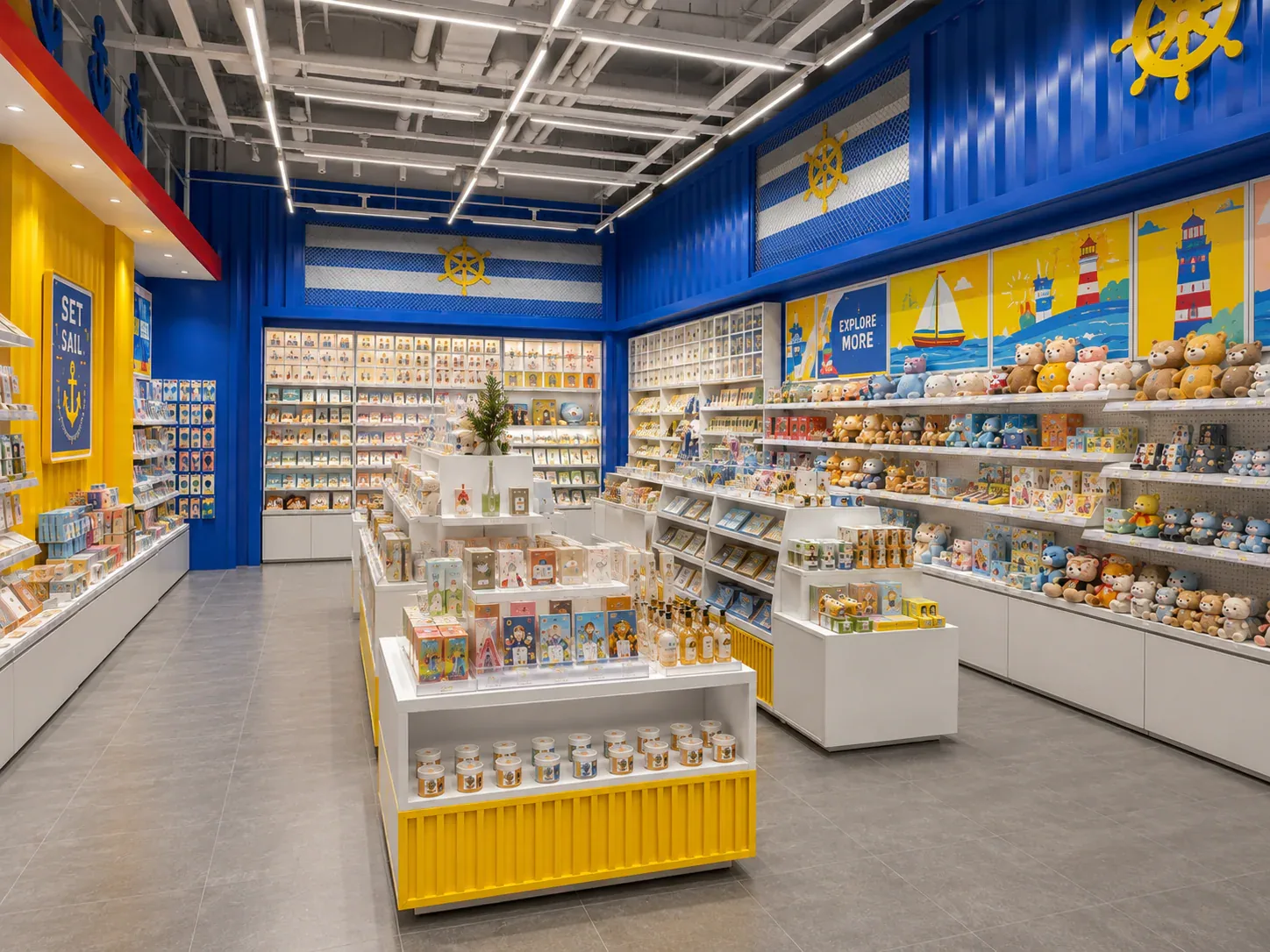
Deciding Which Fixtures to Customize and Which to Standardize
The best fixture programme is rarely the one in which every component is custom, or the one assembled entirely from standard products. A useful choice starts with the job each part must perform.
Read next →Get a project-specific recommendation.
Send your store plan, product sizes, fixture quantities, destination and opening target. BENSON will identify the product fit, engineering inputs and quotation basis.
Start Your Display Project